Crisis & Emergency Services
What is a Crisis?
A crisis is any situation where a person feels overwhelmed and unable to cope with what’s happening. It may involve intense emotional distress, sudden changes in behavior, or concerns about safety. Crises can look different for everyone. Help is available.
You may be experiencing a crisis if…
- You feel overwhelmed, unable to cope, or like things are out of control
- You’re having intense feelings such as anxiety, panic, anger, or sadness
- You’ve noticed sudden changes in mood, behavior, or thinking
- You’re using substances more to manage stress or emotions
- You’re withdrawing from family, friends, or daily activities
- You’re worried about your safety or someone else’s safety
- You or someone you care about may need immediate support

What Should I Do?
If you’re not sure what to do, you’re not alone—and you don’t have to figure it out by yourself. It’s common for all the options to feel overwhelming in the moment. If someone may be in immediate danger, call 911 or 988 right away. For urgent concerns that feel serious but not life-threatening, you can reach out to a local screening center or walk-in clinic for support. If a child or adolescent is in crisis, mobile response services are available to come to you. If you’re unsure where to start, calling 988 is always a safe first step—they can listen and help guide you to the right support. You can also read more about UBHC service options below to find the care that best fits your needs.

Pathways to Support
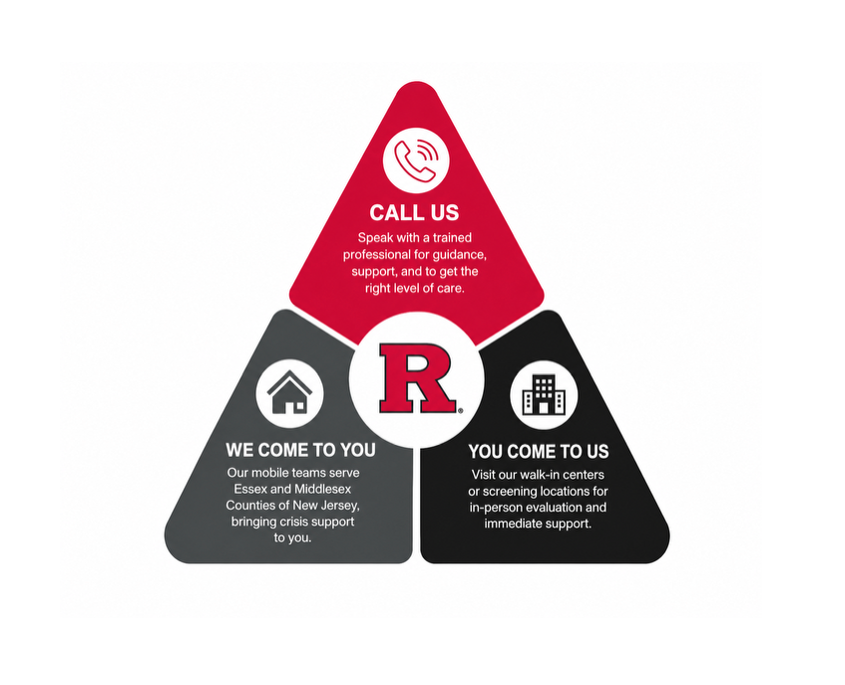
We offer several ways to access crisis care, including speaking with a trained professional by phone, visiting a walk-in crisis center or screening location, or receiving support from a mobile response team in Essex and Middlesex Counties. Whenever possible, our crisis programs provide timely, community-based care and stabilization in the least restrictive setting.